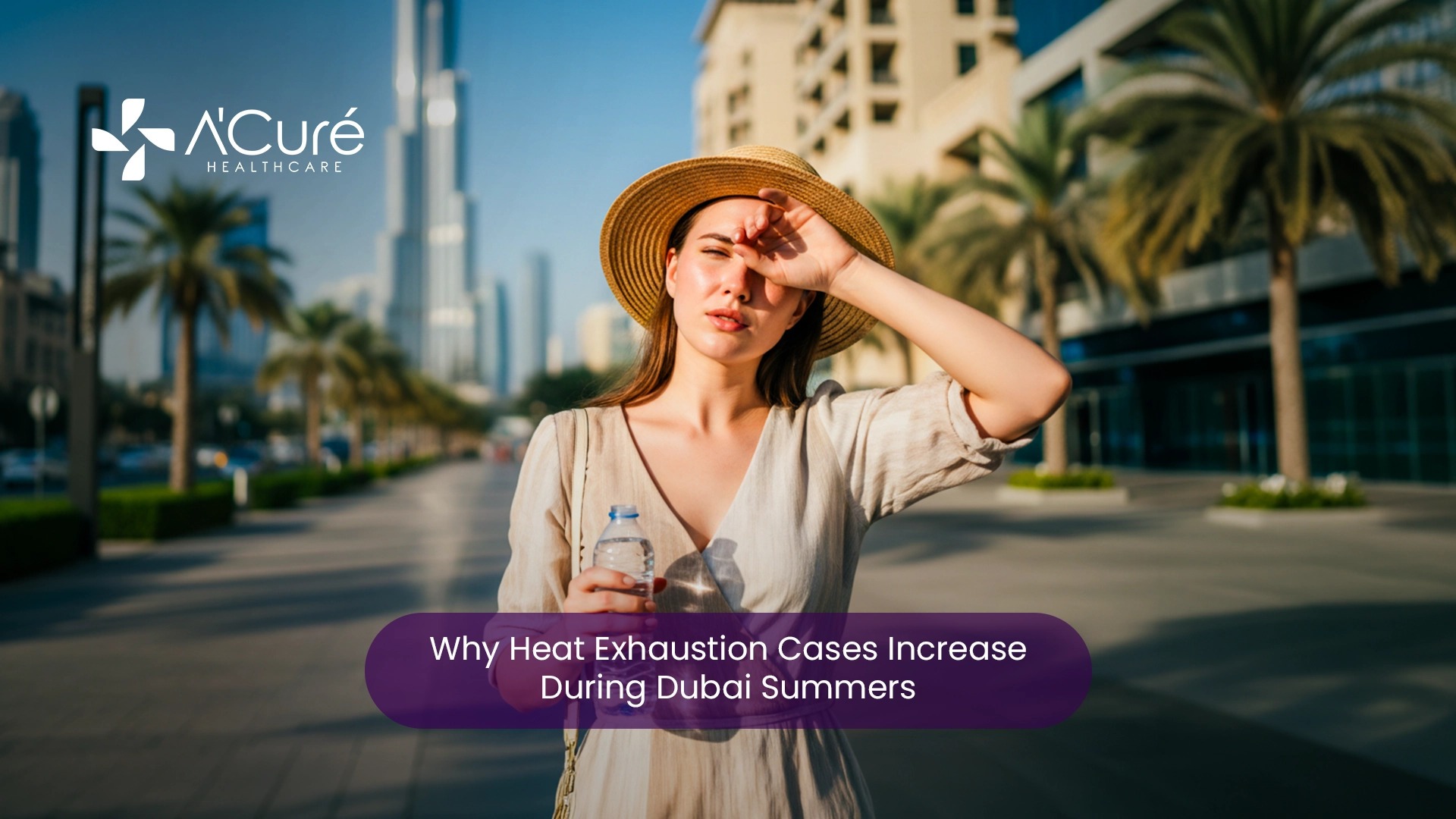
Why Heat Exhaustion Cases Increase During Dubai Summers
Dubai summer is not just hot. It changes how people move, work, exercise, commute, and spend time outdoors.
A short walk to the car, a long wait in traffic, an outdoor work shift, or an afternoon spent sightseeing can feel much heavier during peak summer months. The body works harder to stay cool, and that is one reason heat exhaustion cases become more common during this season.
Heat exhaustion is a form of heat-related illness that can happen when the body loses too much water and salt, usually through sweating. It is not as dangerous as heat stroke, but it should still be taken seriously because symptoms can worsen if ignored.
Public health bodies such as the World Health Organization warn that heat-related illnesses can affect anyone, especially when people are exposed to high temperatures, do not stay hydrated, or cannot cool down properly.
Why Dubai Summer Heat Increases the Risk
Dubai’s summer heat can place extra stress on the body, especially between June and September when outdoor temperatures are high and humidity can make sweating less effective.
Sweating is the body’s natural cooling system. But when a person sweats heavily, they lose fluids and electrolytes. If those losses are not replaced, dehydration symptoms can begin to appear hence why heat exhaustion is often linked to dehydration, long outdoor exposure, and physical activity
According to The World Health Organization extreme heat can affect the body which increases the risk of heat-related illness, especially among people with existing health conditions.
Everyday Situations That Can Trigger Heat Exhaustion
A common misconception is that heat exhaustion only happens to outdoor workers or athletes. In Dubai, it can also happen during ordinary routines. For example, A resident may take a short walk to a nearby grocery store and feel unusually weak afterwards. A tourist may feel wiped out after sightseeing. A delivery rider or security guard maybe exposed to direct heat for hours. Even a leg day at gym can make you feel exhausted more than the normal fatigue in this hot weather.
The risk increases as people tend to brush off early signs, have low water intake, drink too much caffeine, or push through fatigue because they assume it is “just the heat.”
Alcohol can also make dehydration worse, especially after a night out drinking. This is why some people search for hangover IV drip for faster recovery. However, it is important to understand that alcohol-related dehydration and heat-related illness still need proper assessment and not self-treatment.
Heat Exhaustion Symptoms to Watch For
Heat exhaustion symptoms can feel like normal tiredness at first, which is why many people ignore them.
Common signs may include:
- Heavy sweating
- Weakness
- Dizziness or light-headedness
- Headache
- Nausea or vomiting
- Muscle cramps
- Cool or pale skin
- Fast pulse
- Thirst or dry mouth
These symptoms should not be brushed off, especially if they appear after time outdoors, exercise, travel, or long exposure to Dubai summer heat.
Dehydration Symptoms Are Not Always Obvious
Many people think dehydration simply means feeling thirsty. Dehydration symptoms can be very subtle.
Someone may feel unusually tired, heavy, dizzy, or weak. They may have a darker urine or a racing heartbeat.
In Dubai, people tend to underestimate fluid loss since they move between air-conditioned spaces and outdoor heat. The body is still adjusting to constant temperature changes and working harder than usual.
That is why dehydration prevention matters before symptoms turn severe and gets difficult to manage.
Heat Stroke vs Heat Exhaustion
Understanding heat stroke vs heat exhaustion is important because one can become an emergency.
Heat exhaustion usually takes place before heat stroke. The body is overheated, tired, and dehydrated, but the person may still be responsive.
Heat stroke is more serious. It can involve confusion, altered mental state, fainting, or loss of consciousness.
| Condition | Common Signs | What It Means | What to Do |
| Heat exhaustion | •Heavy sweating •Weakness •Headache •Nausea •Cramps | Body overheating & fluid loss | Shift to a cool place, rest, hydrate, and seek medical advice if symptoms get worse |
| Heat stroke | •Confusion • Fainting •Seizures •High body •temperature •Altered mental state | A medical emergency | Call emergency services immediately |
The key difference is the mental state. Dubai Health Authority refer to heat stroke as a medical emergency that can be life threatening if treatment is delayed.
Who Is More at Risk?
Outdoor workers, athletes, tourists, children, older adults, and people with existing health conditions are usually more at risk.
People on certain medications can be extra sensitive to heat. Blood pressure medications and diuretics are some of the examples.
Some individuals may take time to identify or communicate symptoms early such as young children or older adults. So, families often need to notice the small changes such as unusual tiredness, confusion, irritability, or low energy.
Why Early Recognition Matters
The treatment for heat exhaustion is simple: stopping activity, shifting to a cooler place, resting, loosening tight clothing, and sipping fluids slowly.
But timing is extremely important.
If symptoms are identified earlier, the person has a better chance of recovering before the condition becomes worse.
Medical attention is important if symptoms are severe, do not improve, such as repeated vomiting, confusion, fainting, chest pain, breathing difficulty, or extreme weakness.
Prevention Checklist: Summer Health Tips for Dubai
These summer tips can help prevent and reduce risk:
- Keep sipping water to keep your water intake steady, even if you are not feeling thirsty.
- Skip outdoor plans during peak heat hours if possible.
- Wear light and loose clothing.
- Take shade or cooling breaks.
- Replenish your body with fluids after sweating, exercising, or outdoor work.
- Limit excessive caffeine and alcohol intake in hot weather.
- Notice signs such as dark urine colour which may suggest low fluid intake.
- Keep checking on the children, elderly adults, and outdoor workers.
- Do not brush off symptoms such as dizziness, nausea, headache, or unusual weakness.
- Immediately contact emergency medical help if symptoms get worse.
In Dubai, early action matters because heat exhaustion does not start with something extreme, it can happen during your ordinary routine like commuting, sightseeing, working outdoors, or spending too long in the sun without enough fluids.
The Role of Electrolytes and Fluids
When your body sweats too much, it does not lose water alone but also salts and minerals. This is when electrolyte replacement matters the most, especially after a long outdoor activity such as running or vomiting and diarrhea.
Usually drinking water, resting, and cooling down may be sufficient for most of the people. For others, oral rehydration solutions or medical guidance may be required.
IV fluids may be used in cases when a person cannot keep fluids down and is vomiting. Hydration IV therapy and IV fluids should be given only when medically needed and is administered under a trained healthcare professional.
However, it is not considered as a shortcut or a guaranteed solution for every heat-related illness.
When IV Therapy May Be Discussed
People often consider IV therapy after heat exposure, dehydration, fatigue, or late nights. In Dubai, this has become more popular and appealing because residents and tourists often want care that is private, convenient, and without the added stress of travelling while unwell.
Mild dehydration usually improves with resting, cooling, drinking water, and electrolyte replacement. More serious symptoms need medical assessment. If someone is fainting, confused, vomiting repeatedly, struggling to breathe, or extremely weak, they should not rely on hydration IV therapy at home as the first step.
Emergency services are to be contacted immediately in serious cases.
Where A’Cure Healthcare Fits In
A’Cure Healthcare fits into Dubai’s growing need for accessible, non-emergency healthcare support.
During summer season, residents and visitors may need guidance and awareness when it comes to identifying dehydration symptoms, heat exposure, or recovery support. Additional services such as doctor visits, IV therapy, hydration support, and home-based care can help patients understand better whether their symptoms can be managed at home or need further medical attention.
The important point is responsible care and to treat each case differently. Heat exhaustion can show up differently in every person. The recommended treatment should be based on the patient’s symptoms, medical history, and seriousness of the condition.
Staying Safe During Dubai Summers
Dubai summers are not something that can be avoided. Work commitments, school runs, travel plans, and outdoor jobs continue, even when the heat is at its peak.
Small habits and a preventive approach can help reduce heat exhaustion cases. Keeping your body cool, drinking fluids regularly, replacing lost fluids such as electrolytes, and not ignoring early symptoms of dehydration can play a huge part in keeping yourself safe.
Heat exhaustion can often be managed if caught early, but heat stroke is an emergency. Knowing the difference can protect health during the hottest months of the year.
Dubai summers are part of everyday life. Being aware of how heat affects the body and recognising the early signs can make a real difference before a minor problem turns into a medical emergency.
FAQs
1. What are the early signs of heat exhaustion?
Early signs may include heavy sweating, weakness, dizziness, headache, nausea, muscle cramps, thirst, or unusual tiredness after recent heat exposure.
2. How is heat exhaustion different from heat stroke?
Heat exhaustion usually causes weakness, sweating, nausea, and dizziness. Heat stroke is more serious and involves confusion, fainting, seizures, or altered mental state.
3. What should you do first for heat exhaustion?
Stop the current activity, shift to a cooler place, rest, loosen tight clothing, and sip fluids slowly. Seek medical help if symptoms get worse.
4. Can dehydration make heat exhaustion worse?
Yes. Dehydration can make it harder for the body to cool itself, especially when fluids and electrolytes are lost through heavy sweating.
5. Is IV therapy always needed for heat exhaustion?
No. Mild cases may improve with rest, cooling, water intake, and electrolyte replacement. IV therapy should only be considered when medically needed and is administered by medical professional.