How to Rank Your Website First in Google: Complete SEO Guide for Higher Rankings (2026)
Every business owner wants to see their website on the first page of Google. Higher rankings mean more visibility, more website traffic, more leads, and ultimately more sales. However, getting to the top of Google isn’t about finding a secret trick or using shortcuts. Google’s search algorithms are designed to reward websites that provide the most helpful, relevant, and trustworthy content for users.
Whether you own a local business, an eCommerce store, a service-based company, or a personal blog, understanding how Google ranks websites can help you build a long-term SEO strategy that delivers sustainable results.
This guide on Uaeseo.agency explains exactly how to rank your website higher in Google using Google’s recommended best practices and practical SEO techniques that work in 2026.
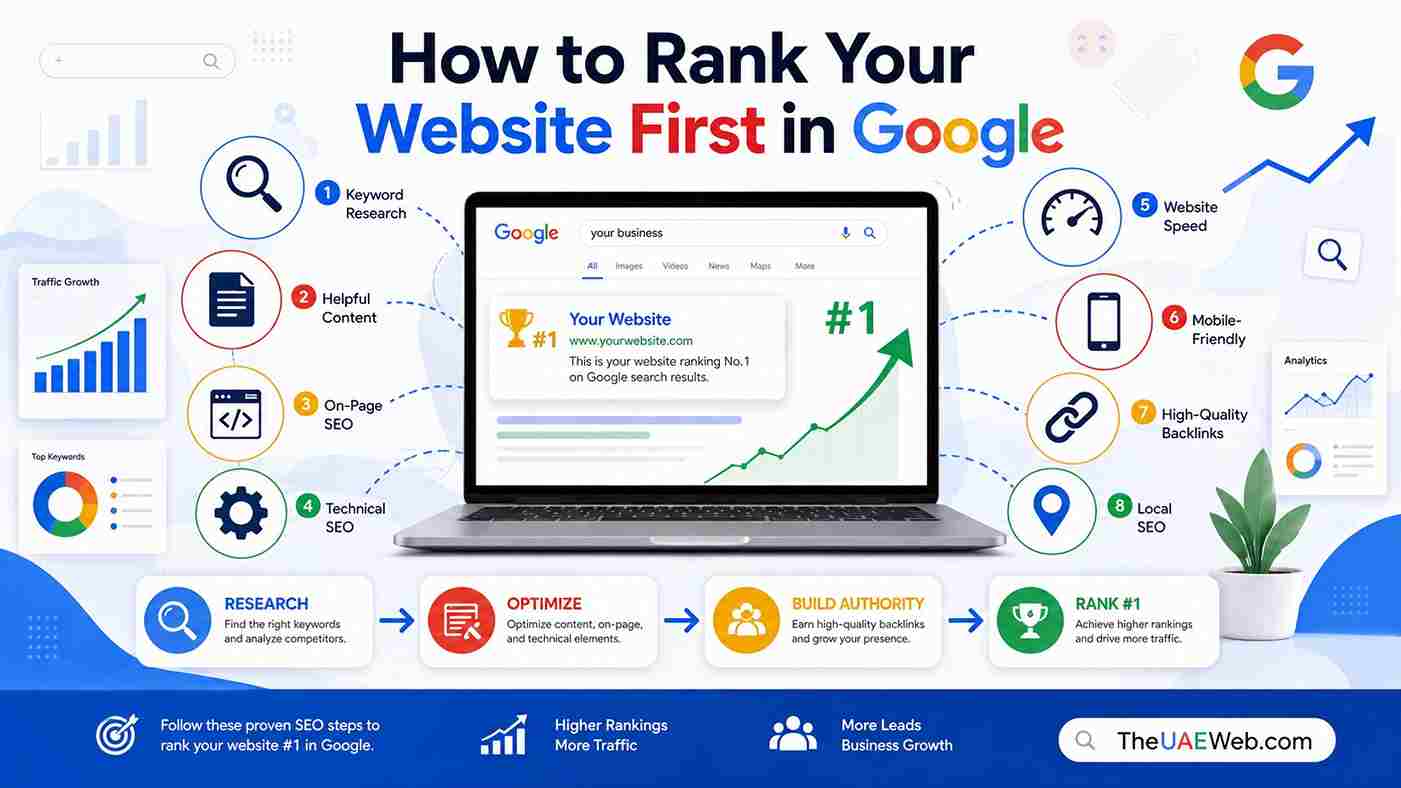
How to Rank Your Website First in Google
Google uses hundreds of ranking factors to determine which pages appear in search results.
These factors help Google understand:
- Content quality
- Search intent
- Website authority
- User experience
- Page speed
- Mobile friendliness
- Backlinks
- Technical SEO
- Website security
Google’s goal is simple: show users the most helpful and relevant results for every search.
Instead of trying to manipulate rankings, focus on creating a website that genuinely helps visitors solve their problems.
Is It Possible to Rank First on Google?
Yes, but no one can guarantee the number one position.
Google rankings constantly change based on:
- Competition
- Search intent
- Content quality
- Algorithm updates
- User behavior
Ethical SEO improves your chances of reaching the first page, but success requires consistent effort, patience, and high-quality content.
Step 1: Understand Your Audience
The foundation of SEO is understanding what your audience is searching for.
Ask questions like:
- What problems do customers have?
- What questions do they ask?
- What solutions are they looking for?
- Which services do they need?
- What keywords do they use?
Creating content around real customer needs helps Google understand your website’s relevance.
Step 2: Perform Keyword Research
Keyword research identifies the terms people use in search engines.
Focus on:
- Primary keywords
- Long-tail keywords
- Local keywords
- Informational keywords
- Commercial keywords
For example:
Instead of targeting only:
SEO
You may also target:
- SEO services in Dubai
- Local SEO for small businesses
- WordPress SEO guide
- Technical SEO checklist
Long-tail keywords are often easier to rank for and attract more qualified visitors.
Step 3: Create Helpful Content
Content remains one of Google’s strongest ranking signals.
Helpful content should:
- Answer user questions
- Solve problems
- Be accurate
- Include examples
- Stay updated
- Demonstrate expertise
Instead of writing for search engines, write for people.
Google rewards websites that provide genuine value.
Step 4: Optimize Your On-Page SEO
Every page should be optimized properly.
Important on-page SEO elements include:
SEO Title
Write a compelling title containing your primary keyword.
Meta Description
Summarize your page clearly and encourage users to click.
Headings
Use logical heading structures such as:
- H1
- H2
- H3
This improves readability.
URL Structure
Keep URLs:
- Short
- Descriptive
- Keyword relevant
Example:
yourdomain.com/local-seo-guide
Image Optimization
Optimize images by:
- Compressing files
- Using descriptive file names
- Adding alt text
Images improve both accessibility and SEO.
Step 5: Improve Website Speed
Users expect websites to load quickly.
Slow websites often experience:
- Higher bounce rates
- Lower conversions
- Poor user experience
Improve speed by:
- Compressing images
- Enabling caching
- Using fast hosting
- Minimizing unnecessary plugins
- Using a Content Delivery Network (CDN)
Fast websites generally provide a better experience for users.
Step 6: Make Your Website Mobile Friendly
Most Google searches happen on mobile devices.
A mobile-friendly website should:
- Display properly on all screen sizes
- Have readable text
- Load quickly
- Include easy navigation
- Avoid intrusive popups
Google primarily uses the mobile version of websites for indexing and ranking.
Step 7: Focus on Technical SEO
Technical SEO helps search engines crawl and understand your website.
Important tasks include:
- XML sitemap
- Robots.txt optimization
- HTTPS security
- Canonical URLs
- Broken link fixes
- Structured data
- Crawl error resolution
Technical improvements support overall SEO performance.
Step 8: Build High-Quality Backlinks
Backlinks remain an important ranking factor.
Good backlinks come from:
- Industry websites
- News publications
- Business directories
- Educational resources
- Trusted blogs
Avoid:
- Link farms
- Spam directories
- Purchased low-quality links
Quality always matters more than quantity.
Step 9: Optimize for Local SEO
If you serve customers in a specific location, local SEO is essential.
Optimize:
- Google Business Profile
- Business citations
- Local keywords
- Customer reviews
- Location pages
Example:
Instead of targeting only:
Dentist
Target:
Dentist in Dubai
This helps attract local customers.
Step 10: Improve User Experience
Google wants users to find answers quickly.
Improve user experience by:
- Using clear navigation
- Writing short paragraphs
- Adding images
- Including FAQs
- Improving readability
- Reducing intrusive ads
Visitors should easily find the information they need.
Step 11: Update Existing Content
SEO isn’t a one-time task.
Regularly update articles by:
- Adding new information
- Improving accuracy
- Updating statistics
- Expanding sections
- Fixing broken links
Fresh content often performs better over time.
Step 12: Use Internal Linking
Internal links connect pages within your website.
Benefits include:
- Better navigation
- Improved crawling
- Increased page authority
- Longer visitor sessions
Link related articles naturally whenever helpful.
Step 13: Monitor Your SEO Performance
Track your progress using analytics tools.
Monitor:
- Organic traffic
- Keyword rankings
- Click-through rate
- Bounce rate
- Conversions
- Indexed pages
Regular monitoring helps identify improvement opportunities.
Step 14: Build Topical Authority
Instead of publishing random articles, become an authority in one subject.
For example, if you provide SEO services, publish comprehensive content about:
- Keyword research
- Local SEO
- Technical SEO
- Link building
- WordPress SEO
- SEO audits
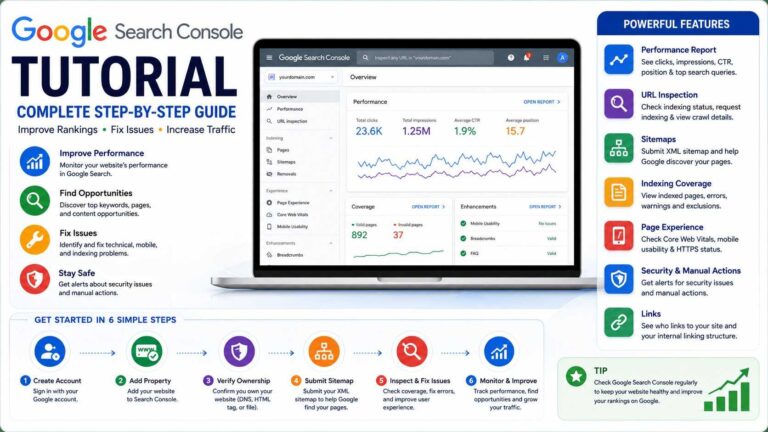
- Google Search Console
- Website optimization
Topical authority helps search engines trust your expertise.
Step 15: Earn Trust with E-E-A-T
Google evaluates websites based on:
- Experience
- Expertise
- Authoritativeness
- Trustworthiness
You can strengthen these signals by:
- Publishing original content
- Showing real experience
- Citing reliable sources when appropriate
- Keeping information accurate
- Displaying business information clearly
Trust is essential for long-term rankings.
Common SEO Mistakes That Prevent Rankings
Many websites fail because of avoidable mistakes.
Examples include:
- Keyword stuffing
- Duplicate content
- Thin content
- Slow loading speed
- Broken links
- Poor mobile experience
- Ignoring technical SEO
- Buying spam backlinks
- Publishing AI-generated content without human editing
- Not updating old articles
Avoiding these issues improves your website’s long-term performance.
How Long Does It Take to Rank on Google?
SEO is a long-term strategy.
General timelines:
- Low-competition keywords: 3–6 months
- Medium competition: 6–9 months
- Highly competitive industries: 9–18 months
Results depend on:
- Website authority
- Competition
- Content quality
- SEO consistency
- Backlink profile
Patience and consistent optimization are essential.
Can Paid Ads Help SEO?
Google Ads and SEO are separate.
Running ads does not directly improve organic rankings.
However, ads can:
- Increase brand awareness
- Generate traffic
- Test keywords
- Support marketing campaigns
Long-term organic growth still depends on strong SEO.
Frequently Asked Questions
Can I Rank First Without Backlinks?
It is possible for low-competition keywords, but high-quality backlinks significantly improve your ability to compete in competitive search results.
How Many Keywords Should One Page Target?
Focus on one primary keyword and several closely related secondary keywords that naturally fit the topic.
Does Website Age Matter?
Older websites often have more authority, but new websites can also rank well with helpful content, strong technical SEO, and quality backlinks.
How Often Should I Publish New Content?
Consistency is more important than frequency. Publishing one high-quality article each week is generally more effective than publishing low-quality content every day.
What Is the Most Important Google Ranking Factor?
There is no single ranking factor. Google evaluates a combination of helpful content, relevance, backlinks, technical performance, page experience, and user satisfaction.
Why Businesses Choose Professional SEO Services
Many businesses hire SEO professionals because SEO requires ongoing expertise and continuous optimization.
Professional SEO services typically include:
- Website audits
- Keyword research
- Technical SEO
- On-page optimization
- Content strategy
- Local SEO
- Link building
- Performance monitoring
A well-planned SEO strategy saves time and helps businesses compete more effectively.
Final Thoughts
Ranking your website first in Google is not about finding shortcuts or trying to outsmart search engines. It’s about consistently creating valuable content, providing an excellent user experience, and building a trustworthy website that deserves to rank.
The most successful websites focus on solving real problems, answering user questions, and continually improving their content and technical performance. Combine keyword research, high-quality content, technical SEO, local optimization, and ethical link building, and you’ll build a strong foundation for long-term search visibility.
Remember that SEO is a marathon, not a sprint. Businesses that invest in sustainable, user-focused SEO strategies are the ones most likely to achieve lasting success in Google Search.